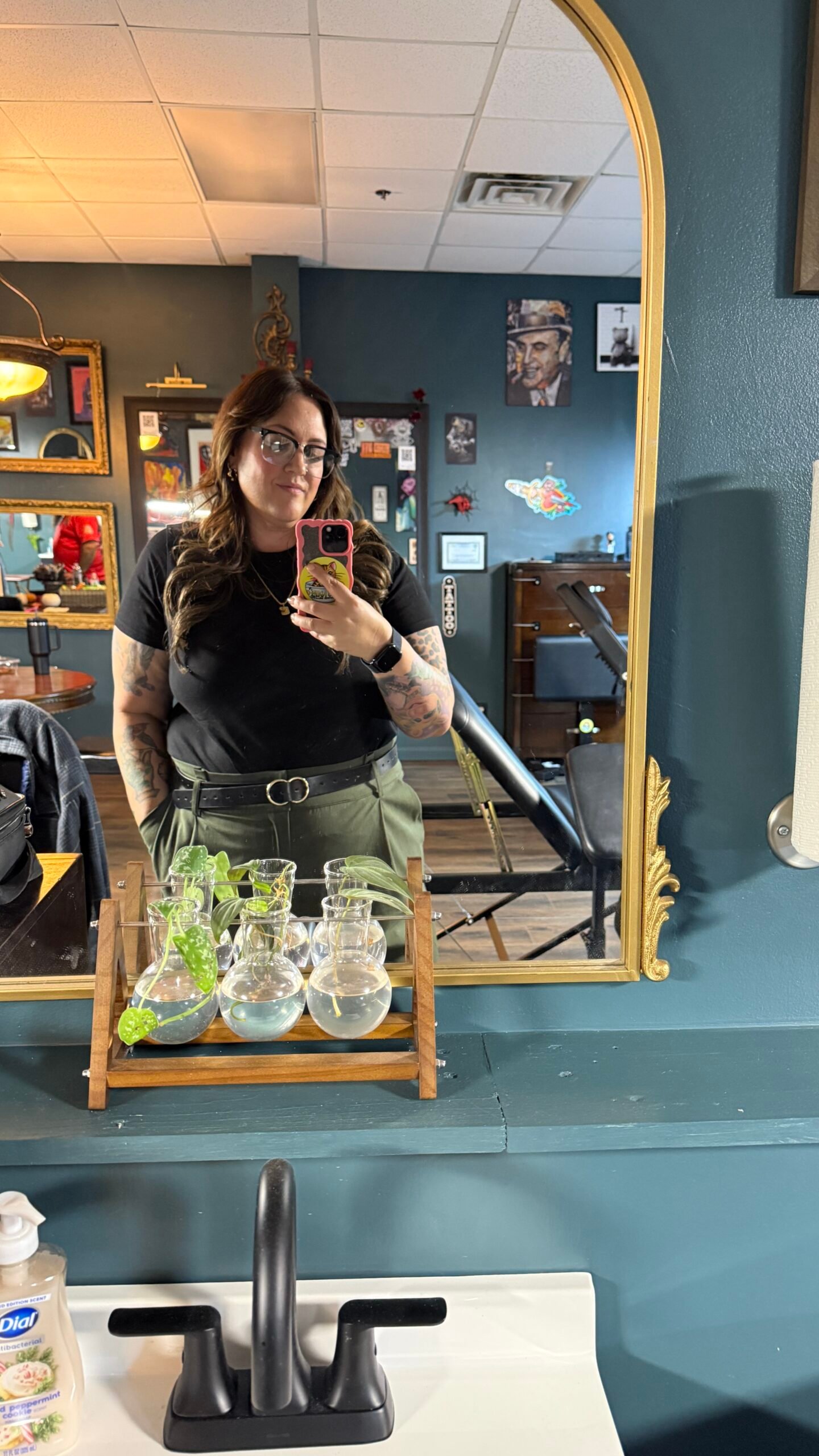
An apprentice tattoo artist in a Cookeville studio put the question that every artist eventually asks: do I really have to become a social media person to do this job?
It got asked on a podcast to Matthew Slaymaker, who runs a digital advertising agency handling brands spending anywhere from a hundred dollars a day to more than thirty thousand. He has watched a lot of creative succeed and a lot of it fail. His answer was short and it was no.
“Be real to who you are. Don’t be someone that you’re not because you feel like you should be. I feel like people see through that and it and it it won’t resonate with people if if it’s not what you’re comfortable with.”
— Matthew Slaymaker, Slaymaker Marketing
You do not have to be everywhere either
“think about like where do you actually need to be? You don’t need to be on every platform. Like if TikTok is your audience, then great. Yeah, fine. Go there and try to find ways that you can bring to life your content and stand out in a way that’s still true to you.”
— Matthew Slaymaker
He practises what he is preaching, and admits the cost. His audience is on LinkedIn, and he is comfortable in conversation, on a panel, on a stage. Talking to a camera alone is not something he enjoys: “there’s no feedback loop there. It feels completely unnatural. So I still haven’t posted a video on LinkedIn of me talking.” He knows he should. He has not. And his business grew two hundred percent last year anyway.
Change the format before you change yourself
The most useful part of his answer is that “I hate being on camera” is a format problem, not a character flaw:
“maybe there’s a an employee on your team, an intern who is more comfortable do being in front of the camera and they can do a lot of that kind of stuff. Maybe there’s someone who can kind of interview you And tee you up with questions. So, and then edit it so you feel more comfortable and you’re not talking directly to camera.”
— Matthew Slaymaker
For a tattoo studio that is not theoretical. Someone else holding the phone while you work. A client interview instead of a monologue. A time-lapse of a piece with your voice over the top rather than your face in front of the lens. All of those hit the same goal — showing that you can do the work and that people trust you with it — without asking you to become an entertainer.
He is honest about the trade-off on video platforms: “you have to hook their attention in those first couple of seconds, or you’re gonna lose them.” That is real. It is also a craft you can learn without pom poms.
The myth underneath the anxiety
There is an older belief sitting behind all this, and Paul Pape has spent a lot of time on it. He runs Gamify Business, coaches creatives, and has a TEDx talk on the starving artist myth. His research on where the idea came from is genuinely infuriating:
“what a lot of people don’t know is it was created as a joke. It was a joke from a bunch of rich kids who had rich families, and they thought it would be fun to play poor and be poets and just live on the streets. Now they were never poor, ’cause they came from rich people.”
— Paul Pape, Gamify Business
And what it displaced:
“before the industrial revolution, artists were making bank… they had patrons, they had the church was supporting them.”
— Paul Pape
The romance of the broke artist was invented by people who could not go broke. It has cost working artists money ever since, because it teaches you that charging properly means selling out.
What it does to your pricing
“if you underprice yourself, you’re seen as valueless. And if you price yourself adequately or a little bit high, that hurt on your customers actually makes you more valuable.”
— Paul Pape
You can watch this play out inside a single studio. Two artists doing comparable work, and the one who is visibly uncomfortable taking money attracts different clients and different opportunities than the one who is not. The tattoo is the same. The signal around it is not.
What to actually do
- Pick one platform where your clients already are and ignore the rest without guilt.
- Choose a format you can sustain. Photos of healed work, a client interview, hands-only video. Consistency beats polish.
- Get someone else behind the camera if the camera is the problem.
- Ask every happy client for a review on the day, while they are still looking at it.
- Price for the skill, not for your nerves.
Paul’s advice for anyone building something around their own craft is the same thing in one line: stop trying to appeal to everyone, because “as soon as you try to appeal to everyone, you gray yourself out.” Your work already looks like somebody. Let it.
Quotes are verbatim from the raw Riverside transcripts of the Unscripted interviews, trimmed only for false starts and filler.